
DESIGNED FOR
VISUAL COMFORT
- FL-41 lenses for migraine and light sensitivity
- Useful for screens, glare and harsh indoor lighting
- Prescription and non-prescription options
- Built around real-world customer feedback
New: understand light sensitivity first
FL-41 lenses are one possible route for people who struggle with light, glare, screens, supermarkets or harsh indoor lighting. If you are still trying to understand why everyday environments feel so difficult, start with our broader guide to light sensitivity and photophobia.
It explains screen headaches, fluorescent and LED lighting, supermarket dizziness, visual overload, migraine, vestibular migraine, sensory sensitivity and other common triggers in plain English.
There are two ways to order from this page.
Option 1: Join our FL-41 Community Feedback Programme. With any Peep frame, your first pair of FL-41 lenses are included. If you want FL-41 in your own frame through the programme, fitting is £30.
Option 2: Prefer not to join? You can buy FL-41 lenses directly at standard pricing, or order a sample first.
Want to see how people are getting on? You can also view the early FL-41 results page for measured real-world findings from our Community Feedback Programme.
Early findings from Peep’s FL-41 Community Feedback Programme
We are tracking real-world feedback from people using FL-41 lenses for migraine, light sensitivity, screen discomfort and harsh indoor lighting.
reported an improvement after 1 month
average reduction in reported symptom severity
Based on matched baseline and 1-month responses. Observational, self-reported data; not a clinical trial.
What is FL-41?
FL-41 lenses are specialist rose-tinted lenses designed to filter a narrow band of blue-green light, commonly associated with light-triggered discomfort. Many people choose FL-41 glasses to help with migraines, photophobia, screen sensitivity, and harsh indoor lighting.
At Peep, FL-41 is available as a fully custom lens option rather than a generic ready-made pair. That means you can choose the frame, prescription type, tint strength, coatings, and upgrades that suit how you actually use them.
If you are looking for glasses to help with migraines, FL-41 lenses are one of the best-known specialist options. They are commonly used by people with light sensitivity to make screens, supermarket lighting and bright environments easier to tolerate. For a broader explanation of those triggers, read our Light Sensitivity Guide.
Who can FL-41 help?
- People with migraine, including vestibular migraine
- People with chronic light sensitivity or photophobia
- People who struggle under LEDs, fluorescents, or supermarket lighting
- People with post-concussion light sensitivity
- People with blepharospasm or visual snow who want better comfort in bright environments
- People who find screens tiring or visually harsh
FL-41 helps many people, but not everyone. That is why real-world wear matters more than overblown claims.
How does FL-41 work?
FL-41 lenses filter specific light wavelengths linked to migraine triggers and visual discomfort. For many people, that makes bright environments feel less harsh and easier to tolerate.
They are not a cure for migraines, and they do not replace medical care. What they can do is help reduce the visual load created by screens, fluorescent lighting, LEDs, glare, and other light sources that some people find difficult.
Where FL-41 lenses may help
FL-41 for supermarket lighting
Many people with light sensitivity find supermarkets difficult because of bright LEDs, reflective floors, high-contrast aisles and constant changes in brightness. FL-41 can help soften that harshness for some wearers.
FL-41 for screens and office lighting
FL-41 may help people who struggle with screens, overhead LEDs or fluorescent office lighting, especially when light sensitivity builds through the day.
If your main problem is screen work, close-up tasks or shifting focus at work, you may also want to look at our Work-Optimised Lenses.
FL-41 for migraine recovery days
Some people use FL-41 most on the day of a migraine or the day after, when light feels sharper and visual fatigue is higher.
FL-41 for harsh indoor lighting
Shops, hospitals, classrooms, offices and other LED-heavy spaces can feel visually intense for people with photophobia. A specialist FL-41 tint may make those environments easier to manage.
FL-41 lens options
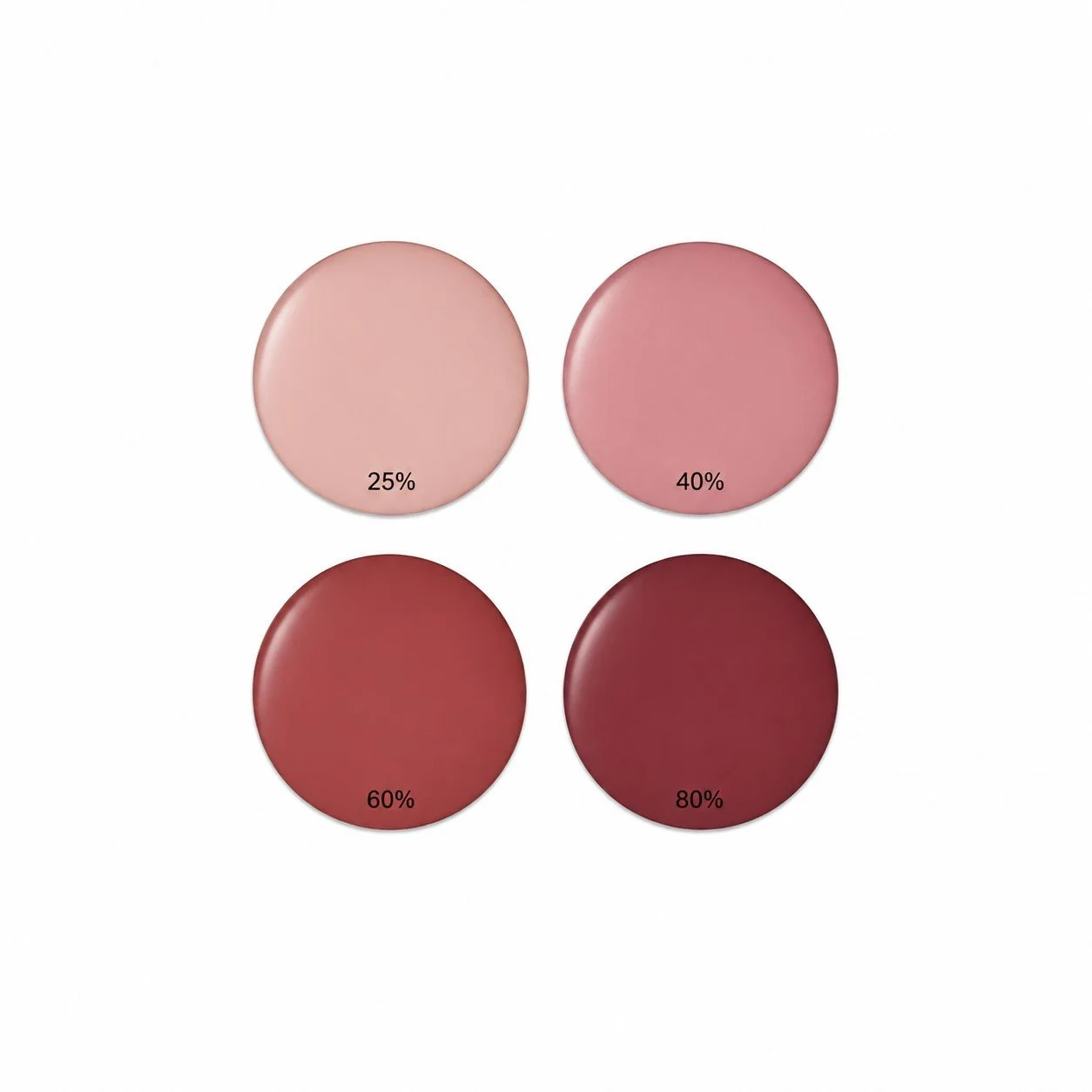
- Tint density: 25%, 40%, 60% and 80%
- Prescription options: non-prescription, single vision or varifocal
- Coatings: Everyday or Easy Life
- Thinner lenses: 1.6 or 1.67 index
- Light-reactive: optional Transitions upgrade
How to choose a tint: 25% is the lightest and most subtle. 40% is a strong everyday option for mixed indoor use. 60% gives stronger filtering for harsher environments such as supermarkets, fluorescents and LED-heavy spaces. 80% is the darkest option for people who want maximum filtering.
We also use a 50% reference sample when comparing the gap between 40% and 60%.
Not sure which combination to choose? Use the guide below and we’ll suggest a sensible starting setup based on how light affects you, what you currently wear and where you plan to use the lenses.
Find your FL-41 setup
Answer a few simple questions about your light sensitivity, what you currently wear and where you'll use your glasses.
We'll suggest a starting setup and show you exactly what to select when ordering. You'll only see questions that are relevant to you.
Do you currently wear glasses?
This helps us understand what your eyes are already used to.
What type of lenses do you currently wear?
Choose the closest match.
Are you comfortable with your current lens type?
Will these FL-41 lenses need a prescription?
What do you mainly need your prescription glasses for?
What would you most like your FL-41 lenses to help with?
Choose the main reason. We'll still ask about any other relevant triggers.
Overall, how sensitive are you to light?
1 = hardly affects me • 10 = extremely difficult to tolerate
What do you currently find most comfortable in bright indoor environments?
What you already wear comfortably is an important part of choosing an appropriate tint depth.
How often do you need sunglasses indoors?
How does your current tint feel indoors?
Roughly how much screen use do you have each day?
How uncomfortable do bright screens feel?
1 = no real issue • 10 = extremely difficult
How much do LED or fluorescent lights bother you?
1 = no real issue • 10 = extremely difficult
Do you experience migraines or light-triggered headaches?
When they occur, how severe are they?
1 = mild • 10 = extremely severe / disabling
How often do you experience them?
How strongly does light trigger or worsen them?
1 = hardly at all • 10 = very strongly
How uncomfortable is bright outdoor sunlight?
1 = no real issue • 10 = extremely difficult
How long would you ideally like to wear these lenses?
Which lens coating would you prefer?
Both include anti-reflective treatment. Easy Life is the upgraded option.
Where will the frame for your FL-41 lenses come from?
Would you like to take part in our FL-41 Community Feedback Programme?
This is completely optional. If you take part, we'll ask you for feedback after you've had time to use your FL-41 lenses so we can keep learning how different setups work for different people.
Your suggested FL-41 setup
Your setup is saved and will follow you while you order.
Why this setup?
See ordering steps
General eyewear guidance only. This does not diagnose or treat migraine, photophobia or another medical condition. If you have new or worsening visual symptoms, speak to your optometrist or an appropriate healthcare professional.
Why custom FL-41 beats ready-made glasses
- Better fit: built around a frame you actually want to wear
- Prescription flexibility: not just plain ready-made lenses
- Better lens choices: coatings, thinning, transitions and varifocals
- More accurate comfort: strength and setup matched to real use
- Stronger quality control: specialist FL-41 tinted lenses glazed properly into fitted eyewear
Many online FL-41 sellers focus on basic ready-made glasses. Peep is different. We glaze FL-41 lenses into properly fitted eyewear, with the option to use your prescription and choose a setup that suits work, screens, daily wear, or harsher light.
How ordering works
This page is designed to help you decide whether FL-41 is right for you, then choose how you want to order.
If your current glasses need repairing before we fit FL-41 lenses, you can also use our glasses repair service for broken hinges, loose arms, snapped frames and general adjustments.
Join the FL-41 Community Feedback Programme
If you choose any Peep frame, your first pair of FL-41 lenses are included as part of the programme. If you want FL-41 in your own frame through the programme, fitting is £30.
This route is ideal if you want the best value and are happy to take part in short follow-up check-ins.
Buy FL-41 lenses without joining
If you do not want to join the programme, you can still order FL-41 lenses directly through our shop at standard pricing.
This route is best if you already know what you want and simply want to place an order, or try a sample first.
Evidence snapshot
Clinical studies and specialist clinics suggest FL-41 can help many people reduce migraine frequency, photophobia discomfort, and other light-triggered symptoms. Results vary, which is why everyday wear matters.
Highlights from the literature
- Migraine: reduced headache frequency and severity compared with neutral tints in light-sensitive patients
- Blepharospasm: fewer spasms and improved light tolerance compared with grey lenses
- Children and visual migraine variants: reported symptom improvements and better quality of life
- Post-concussion: emerging evidence suggests eased photophobia and fatigue, though larger trials are still needed
Bottom line FL-41 is not a cure, but for many people it is a simple, drug-free way to make bright environments more tolerable.
See full references
- University of Utah Moran Eye Center — FL-41 overview
- Blackburn MK, et al. Ophthalmology (2009) — FL-41 improves blink and light sensitivity
- Reyes N, et al. American Journal of Ophthalmology (2024) — reduced neural pathway activation
Real-world experiences with FL-41
Short anonymised comments from people trying FL-41 through Peep’s Community Feedback Programme.
- “The day after a migraine feels easier, and my eyes feel less tired.”
- “When I’m wearing them I feel more relaxed. There’s less tension around my eyes.”
- “Bright supermarket lights used to set my symptoms off. With these lenses I can walk around more comfortably.”
- “They’ve made working on screens all week possible again.”
- “My child finds the world more comfortable and less overwhelming in these lenses.”
FAQs
Do FL-41 glasses help with migraines?
Many people with migraine report fewer or milder light-triggered symptoms when wearing FL-41 glasses, especially under LEDs, fluorescents or on screens. FL-41 is not a cure, but it can make bright environments more tolerable.
What glasses help with migraines?
For people whose migraines are triggered or worsened by light, FL-41 glasses are one of the most widely used options. They are designed to filter specific light wavelengths linked to migraine discomfort and can make bright environments easier to tolerate.
What is FL-41 and how does it work?
FL-41 is a specialist rose-tinted lens filter that reduces specific light wavelengths linked to migraine triggers and light sensitivity. Many people find it more comfortable under modern indoor lighting than generic tints.
Is FL-41 the same as blue-light glasses?
No. Generic blue-light glasses usually filter broadly at shorter wavelengths. FL-41 targets a narrower blue-green band often linked to photophobia discomfort and migraine-triggered visual strain.
Can I get FL-41 with my prescription?
Yes. We offer non-prescription, single-vision and varifocal FL-41 lenses, with options for thinning, coatings and light-reactive upgrades.
Can you fit FL-41 into my own frames?
Yes. If you join our Community Feedback Programme, fitting FL-41 into your own frame is £30. If you prefer not to join, you can still buy FL-41 lenses directly.
What tint strength should I choose?
Most people start with 25% or 40% for general indoor wear. If you want stronger filtering for supermarkets, fluorescents or harsher spaces, 60% is often the next step. 80% is the strongest option.
Can I wear FL-41 all day?
Many people do. A lighter tint is often easier for all-day indoor wear, while a stronger tint may suit harsher lighting environments.
Does FL-41 help on computers and phones?
Often, yes. Many people find FL-41 reduces the harshness of screens and overhead lighting during computer and phone use.
Is FL-41 suitable for night driving?
Use caution. Any tint reduces the amount of light reaching the eye and can increase reflections at night. Many people reserve tinted lenses for daytime use.
How much do FL-41 lenses cost at Peep?
Through the Community Feedback Programme, FL-41 lenses are included with any Peep frame, or £30 in your own frame. If you prefer not to join, you can buy FL-41 lenses directly at standard pricing.
Will FL-41 cure my migraines?
No. FL-41 is not a cure. It is a lens filter that may help reduce light-triggered discomfort and make bright environments more manageable.
Is there scientific evidence for FL-41?
Yes. Several studies and specialist clinic reports suggest FL-41 can reduce photophobia-related symptoms in migraine and other light-sensitive conditions, though individual results vary.
How long does it take to adapt?
Most people adapt within a few days. The colour shift usually becomes normal quite quickly, especially with lighter tints.
Will FL-41 change how colours look?
Yes. Colours look warmer or rosier. That shift is expected and is part of how the filter works.
How do I clean and look after FL-41 lenses?
Rinse with lukewarm water first, then use lens spray or mild soap and a clean microfibre cloth. Avoid paper towels and harsh chemicals.
Do I need to complete surveys if I join the programme?
Yes. The Community Feedback Programme includes short check-ins at 1, 3, 6 and 12 months. You keep your glasses and your feedback helps other people decide if FL-41 is right for them.
References
- University of Utah Moran Eye Center — FL-41 overview
- Blackburn MK, et al. Ophthalmology (2009) — FL-41 improves blink and light sensitivity
- Reyes N, et al. American Journal of Ophthalmology (2024) — reduced neural pathway activation